
AOBRD to ELD: ELD Use Cases and Key Milestones
Electronic Logging Device (ELD) is much more than just a regulatory need. Find out how ELDs can help streamline your fleet...
Read more

Drivers simply log in to the mobile app, start driving and their hours are tracked. With our Federal Motor Carrier Safety Administration (FMCSA) compliant electronic logging device (ELD) software, you can help drivers avoid violations and penalties at roadside inspections.
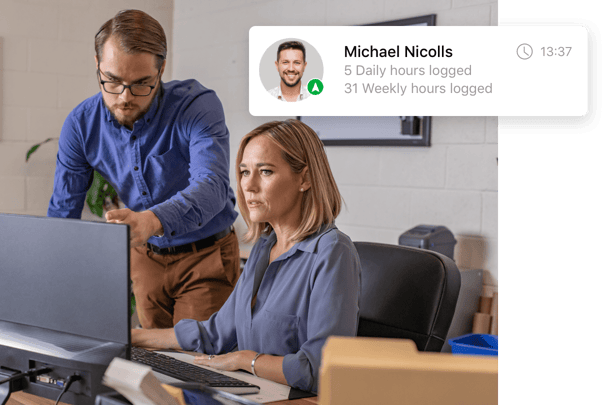
Fleet managers and dispatchers can access daily and weekly hours logged, time remaining, hours of service (HOS) status, violation alerts and Driver Vehicle Inspection Reports (DVIR).

With automatic driving status updates when a vehicle moves, stops or idles, fleet managers can have better control over their fleet performance.

The FMCSA requires most motor carriers and commercial motor vehicle (CMV) drivers who need to maintain a record of duty status (RODS) to have an ELD in their vehicles. The ELD rules also require drivers using Automatic Onboard Recording Devices (AOBRDs) in the past to now be using eLogs.
Read more about the ELD mandate
Choosing Verizon Connect for your ELD solution gives you access to a host of benefits from a global leader in fleet telematics:

Our ELD solution integrates with your Verizon Connect fleet management system, giving you the reliability and flexibility you need to simplify compliance with hours of service regulations.

I’d rather go back to flipping burgers in a burger joint than fill out paper logs again. eLog is best. It’s a perfect system.

I’d rather go back to flipping burgers in a burger joint than fill out paper logs again. eLog is best. It’s a perfect system.
Cost and pricing model will vary by provider, depending on which components are included in an ongoing subscription and which components you own outright. For example: Some providers may give you the engine connectivity hardware and ongoing software as a subscription, but give you flexibility to buy the right devices or bring your own device (BYOD) for your drivers’ needs. Some providers may include the driver’s device for an upfront cost or in a higher pricing subscription, but this hardware is often proprietary with less flexibility of how it can be used beyond electronic logging.
REMEMBER: You can turn the cost of being Federal Motor Carrier Safety Administration (FMCSA) compliant into a profit with the right ELD solution in place.
To ultimately meet the ELD Rule specifications an ELD solution must provide automated, accurate location information at specified increments, which is best accomplished with a GPS fleet management based solution.
Yes. The ELD Rule accommodates the use of smartphones (Android/iPhone) and other wireless devices as ELDs. Logbook embraces this approach today by utilizing smart phones and tablets for driver interaction with hardware installed in the vehicle.
Feel free to visit the official FMCSA resources on ELDs and the ELD Rule.
Yes. You can continue to use Logbook and add more ELD devices as desired. Our current Logbook solution is compliant and updates for the ELD Rule will NOT require you to change hardware later.
1. Select a GPS vehicle tracking provider whose product supports full Federal Motor Carrier Safety Administration (FMCSA) compliance. Choosing the right provider can make or break proper ELD compliance. Make sure that the ELD provider is knowledgeable about how to support ELD regulations with an easy-to-use solution, and flexible, with tools that are easy to integrate/transition into your current operations (a learning curve is normal, but you shouldn’t need a Ph.D. to use something).
2. Help drivers understand the new tracking tools: As you roll out your new vehicle tracking system, make sure the drivers understand that this new technology will help them maintain ELD compliance.
Your drivers will gain more control over their time, letting them create, edit and manage their own hours – plus, the tracking system gives them ways to help stay compliant, including Hours of Service (HOS) compliance tools; near real-time driver feedback; driver vehicle inspection reporting (DVIR); and IFTA mileage reporting.
For companies that can’t go beyond a certain mileage radius, tracking software’s geofencing capabilities help make it clear when drivers are going beyond the point they can be. And for companies worried about drivers putting in too many hours behind the wheel, features in the mobile app make it easy to calculate how many hours they have left for the day.
3. Implement an employee coaching program to increase engagement. The best way to maintain ELD compliance and help make your rollout a success is through effective and consistent driver coaching – your drivers aren’t going to get better if they don’t know what they’re doing wrong.
Share both the good and not-so-good ELD compliance and GPS data, using reports, alerts and data entries that track driver behavior. Violation alerts and reports help managers monitor infractions when they occur, so you can address problems before they turn serious (and costly). The near real-time data that is constantly pouring in from the tracking software lets managers be proactive with instant, visible coachable moments.
4. Get employees on board to make your rollout a success. Don’t make ELD compliance sound like something they have to do because it helps the business – show drivers how it helps them, too, and they’ll be true believers.
The government is mandating electronic HOS compliance to improve safety, reduce risk, manage efficiency, rein in costs and increase overall regulatory compliance – but the one to focus on is safety: When they comply, it ensures they are alert and engaged behind the wheel, reducing the chance of accidents and other mishaps.
Keep the lines of communication open – your drivers may have questions on what they should or should not do – and develop clear written policies that people can reference if they have a question. Encourage people to give feedback on your policies – they might have an idea you didn’t think of.
Last but not least: Coach, encourage and repeat, and your company will be well on its way to compliance.
If you drive for a living and disregard Federal Motor Carrier Safety Administration (FMCSA) regulations, Hazardous Materials regulations (HMR) or CDL regulations, well… what exactly does happen?
For starters, fines – and some of them are no joke; they can go into the tens of thousands. And it’s not just the driver who get the fine in many cases – it’s the owner of the vehicle, or the business, that also gets dinged. In the case of CDL violations, including careless driving or speeding, drivers may have their license suspended or revoked. For a business, that could mean the loss of an employee.
And don’t forget that a business’s insurance can go up if the insurer deems the business a liability due to excessive tickets or fines – so it’s not just a one-time fee to pay; it’s higher costs over time, too.
If you’re curious just how high the fines can be, you can get more info on FMCSA fines, HMR fines and CDL fines. And if you’re curious on how you can be confident the business isn’t risking pricey fines and higher insurance costs, it might be time to investigate GPS vehicle tracking.
With near real-time fleet monitoring, management knows what’s going on in the field as it’s happening, meaning problems like speeding or aggressive driving can be nipped in the bud.
A vehicle tracking solution also helps keep track near real-time hours of service (HOS) and sends that information to the office, letting managers alert drivers to help prevent violations before they run out of hours.
Electronic Logging Device (ELD) is much more than just a regulatory need. Find out how ELDs can help streamline your fleet...
Read moreExplore ELD device mandates and ELD exemptions in our comprehensive guide to eld devices for fleets utilizing electronic...
Read moreLearn more about what unassigned driving time is, how to handle unassigned driving time, and how staying compliant is...
Read more
Get your free 2024 Fleet Technology Trends Report and see how organizations are: